Craig Gundry Presents “Fla. Stat. 768.0706: Three Years Later” at FLDOCA Spring Conference

Craig Gundry Presents “Fla. Stat. 768.0706: Three Years Later” at FLDOCA Spring Conference

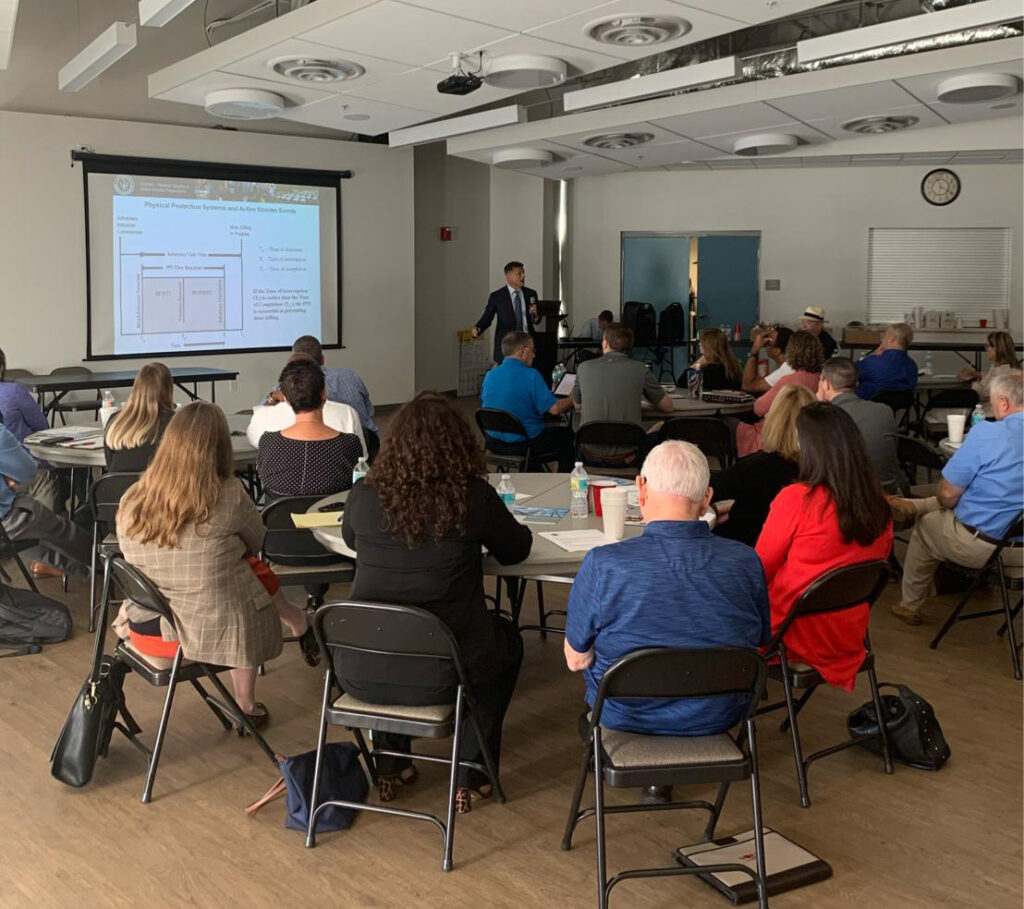
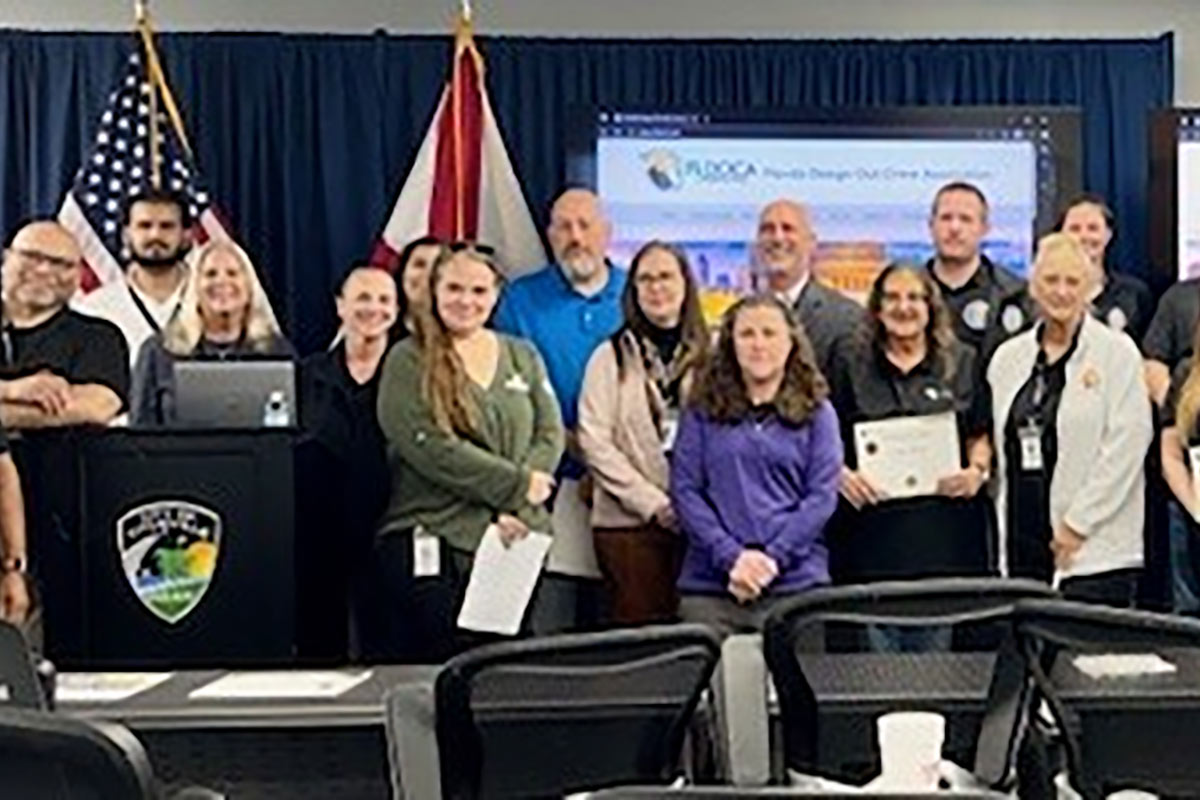
On May 8, 2026, Craig S. Gundry, PSP, FCP, of Critical Intervention Services participated in a panel of field practitioners discussing Florida Statute 768.0706 at the Florida Design Out Crime Association (FLDOCA) Spring Conference in Orlando. The panel, presented under the title “Fla. Stat. 768.0706: Three Years Later,” examined the state of multifamily compliance three years after the statute’s passage as part of HB 837 in 2023. Joining Craig on the panel were Leon Lipsick, FCP, West Palm Beach Housing Authority; Carlos Austin; and Stephen Davis.

The FLDOCA Spring Conference was held at the DoubleTree by Hilton Orlando at SeaWorld, co-located with Florida Crime Prevention Training Institute (FCPTI) courses conducted during the same week. The conference program brought together Florida CPTED practitioners, law enforcement crime prevention specialists, and security professionals from across the state, with additional presentations addressing the USCA CPTED National Design Guidelines and the integration of CPTED into community development planning.

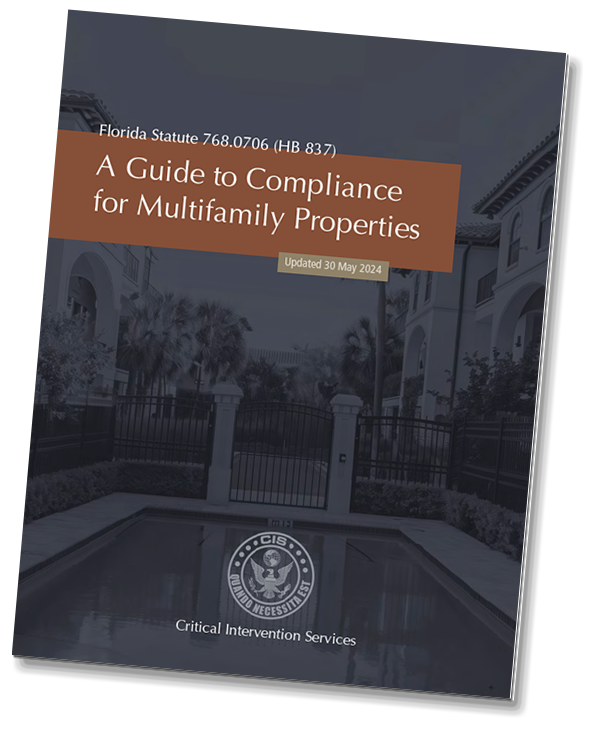
Craig’s presentation reviewed the current status of 768.0706 compliance across Florida’s multifamily sector. Although an increasing number of private equity and property management companies have pursued compliance since the statute’s enactment, the overall number remains low, with much of the existing interest driven by insurance brokers and risk advisors rather than the property operators themselves.

The presentation also addressed HB 1423 and SB 956, companion bills introduced during the legislative session that would have eliminated the presumption against liability for properties where two or more enumerated crimes were reported in the 24 months preceding an incident. Both bills were stopped, but their introduction signals that the statute’s liability framework will remain a subject of legislative attention.

A substantial portion of the discussion focused on the unresolved definitional questions in F.S. 768.0706(2)(a) — ambiguities that have received no substantive clarification since 2023. These include what constitutes a “point of entry and exit” for camera coverage purposes, the unusual 1.8 foot-candle at 18-inch measurement standard for parking lot illumination, and the statute’s undefined use of the term “porches” in its common-area lighting requirement. In the absence of case law or legislative guidance, CIS has developed documented interpretive positions on each of these questions for use in our assessment practice, and the panel discussed how practitioners across the state are navigating the same interpretive gaps.

The presentation concluded with a review of CPTED assessment practice in multifamily environments — natural surveillance and obstructive vegetation, offender concealment opportunities, lighting deficiencies commonly documented during nighttime inspections, territoriality measures, and maintenance conditions — along with practical guidance for maintaining substantial compliance over time through documentation systems, sustained employee training, landscaping contract specifications, and monthly inspection protocols.

CIS thanks FLDOCA for organizing the program and our fellow panelists for a candid exchange on the practical realities of statutory compliance. Craig serves on the FLDOCA board of directors, and CIS remains active in the association’s work advancing CPTED practice throughout Florida.

For property owners and operators seeking guidance on 768.0706 compliance, our six-part compliance guide and CPTED assessment services page.


Contact Us 

Contact us for a free consultation about Fla. Stat. § 768.0706 compliance by calling Tel. +01 (727) 461-9417 or by completing the following form:

Craig

CIS Presents CPTED and Fla. Stat. 768.0706 Program at ASIS West Florida Chapter Luncheon

CIS Presents CPTED and Fla. Stat. 768.0706 Program at ASIS West Florida Chapter Luncheon

On September 18, 2025, Craig S. Gundry, PSP, FCP, Senior Partner and Chief Security Strategist at Critical Intervention Services, presented a program on Crime Prevention Through Environmental Design (CPTED) and Florida Statute 768.0706 during a luncheon meeting of the ASIS International West Florida Chapter. The program was attended by approximately two dozen security professionals from the Tampa Bay region representing corporate security, consulting, and law enforcement backgrounds.

ASIS International is the world’s largest association for security management professionals and the certifying body for the CPP, PSP, PCI, and APP designations. The West Florida Chapter serves practitioners throughout the Tampa Bay area, and its meetings provide a forum for continuing education on developments affecting the profession — a fitting audience for a statute that has created an entirely new category of assessment work for Florida security practitioners.

The presentation opened with an overview of F.S. 768.0706 and the presumption against liability it provides to multifamily property owners and operators who substantially implement its requirements: the seven physical security measures enumerated in 768.0706(2)(a), a CPTED assessment performed within the previous three years by a law enforcement agency or a Florida CPTED Practitioner (FCP), and proper crime deterrence and safety training for all employees, with new employees trained within 60 days of hire.

Because the audience consisted of working security professionals rather than property operators, a significant portion of the program addressed the statute’s unresolved interpretive questions and the positions CIS has adopted for verifying compliance in our assessment practice. These include the undefined scope of “points of entry and exit” for camera coverage — which CIS interprets as all designed entrances through the legal boundary separating exterior public space from the private property — along with the statute’s unusual 1.8 foot-candle at 18-inch parking lot measurement standard, the ambiguous meaning of “porches” in the common-area lighting requirement (which CIS interprets to include breezeways and exterior apartment entrances, but not porches inside leased private living spaces), and the question of what proximity of a light source satisfies the statute’s “lighting in” language. With no case law yet interpreting these provisions, documented and defensible interpretive positions are essential for any practitioner conducting assessments under the statute.

The balance of the program covered CPTED principles as applied to multifamily properties — natural surveillance, natural access control, territorial reinforcement, and maintenance — illustrated with field photography and light meter data from CIS assessments across Florida. Examples included obstructive vegetation conditions, offender concealment opportunities created by structural design, the full spectrum of lighting deficiencies documented during nighttime inspections, and territoriality measures ranging from celebrated entryways to restrictive signage, including a caution regarding signage language that creates a false expectation of security.

CIS thanks the ASIS West Florida Chapter and its officers for the invitation and the engaging discussion that followed. Several of our consultants maintain longstanding involvement with ASIS International, and chapter programs like this one remain one of the best venues for advancing professional practice in our region.


Contact Us 

Contact us for a free consultation about Fla. Stat. § 768.0706 compliance by calling Tel. +01 (727) 461-9417 or by completing the following form:

Craig

CIS Presents CPTED for Multifamily Properties in HAI Group Security Webinar

CIS Presents CPTED for Multifamily Properties in HAI Group Security Webinar

On July 15, 2025, Craig S. Gundry, PSP, cATO, FCP, of Critical Intervention Services delivered a 40-minute presentation on Crime Prevention Through Environmental Design (CPTED) for multifamily properties as part of HAI Group’s webinar, “Strengthening Security in Multifamily Housing: Strategies and Success Stories.” The free webinar paired CIS’s presentation on CPTED principles with a case study on the West Palm Beach Housing Authority’s security initiative, presented by Leon Lipsick, followed by live Q&A with attendees.

Play Video

HAI Group is a member-owned insurance organization founded by public housing authorities nearly four decades ago and today serves as a leading provider of property and casualty insurance to the public and affordable housing industry nationwide. The webinar was inspired by the release of HAI Group’s Housing Security and Law Enforcement Operations Guide, a free resource offering guidance on crime prevention, building community trust, and strengthening partnerships with law enforcement.

Craig’s presentation introduced CPTED as a multi-disciplinary approach to crime prevention that uses urban and architectural design and the management of built and natural environments to reduce victimization, deter offender decisions that precede criminal acts, and build territorial control among residents. The program was organized around the four key CPTED principles — natural surveillance, natural access control, territorial reinforcement, and maintenance — with extensive field photography from CIS assessments illustrating each concept as it appears on real multifamily properties.

Much of the presentation addressed natural surveillance and its two most common adversaries in multifamily environments: obstructive vegetation and deficient lighting. Using nighttime assessment photography with documented light meter readings, Craig illustrated the full range of lighting problems CIS routinely documents during property assessments — obstructed luminaires, inadequate luminous flux, absent and inoperative lights, glare conditions, and excessive contrast ratios — alongside examples of properties with well-executed lighting. The presentation referenced illumination and contrast ratio criteria from the Illuminating Engineering Society’s Guide for Security Lighting for People, Property, and Critical Infrastructure (2016), the authoritative reference CIS uses when evaluating lighting during CPTED assessments.

The program also examined offender concealment opportunities created by structural design, natural access control through landscaping and terrain barriers, and territorial reinforcement measures including celebrated entryways, wayfinding signage, transition zones, and restrictive signage — with a caution for property operators to be conscious of signage language that contributes to a false expectation of security. The presentation concluded with a review of maintenance conditions and physical disorder, followed by a summary of Florida Statute 768.0706 and its three categories of compliance requirements: the seven physical security measures defined in 768.0706(2)(a), the CPTED assessment requirement, and mandatory crime deterrence and safety training for employees.

Insurance carriers and risk advisors have become one of the most consistent drivers of security improvement in the multifamily sector, and programs like this one reflect the growing recognition that environmental design is among the most cost-effective tools available for reducing crime risk on residential properties. CIS thanks HAI Group for the invitation and the West Palm Beach Housing Authority for sharing its experience putting these principles into practice.

For property owners and operators interested in CPTED assessment services or Florida Statute 768.0706 compliance, see our compliance guide and CPTED services page.

Contact Us 

Contact us for a free consultation about Fla. Stat. § 768.0706 compliance by calling Tel. +01 (727) 461-9417 or by completing the following form:

Craig

CIS Consultants Featured on the Property Management Law Solutions Podcast

CIS Consultants Featured on the Property Management Law Solutions Podcast

Critical Intervention Services security consultants Craig S. Gundry, PSP, FCP, and Hector Rodriguez, CPP, FCP, were recently featured guests on the Property Management Law Solutions Podcast, hosted by attorney Tim Baldwin. The episode, titled “Liability & Risk Management for Property Management Companies,” was released on June 10, 2025 and is available on all major podcast platforms.

The Property Management Law Solutions Podcast is produced by Property Management Law Solutions, PLLC, a Florida law firm specializing in landlord and property management representation statewide. Tim Baldwin, the firm’s founder, has been practicing law since 2004 and represents some of the largest property management companies in Florida. His podcast addresses the legal and operational issues confronting landlords and property managers, ranging from evictions and lease compliance to insurance and premises liability.

During the interview, we discussed the liability landscape facing property management companies in Florida and the practical measures available to reduce exposure to negligent security claims. Much of the conversation centered on Florida Statute 768.0706 — the multifamily premises liability law established by HB 837 in 2023 — and the framework it provides for property owners seeking a presumption against liability for criminal acts committed by third parties on their premises. As we’ve noted in our published compliance guides, the statute’s seven enumerated physical security measures are only the starting point. The CPTED assessment requirement, the employee training obligation, and the ongoing burden of demonstrating substantial compliance are where most properties encounter difficulty, and these were recurring themes throughout the discussion.

We also addressed the practical relationship between property managers and security consultants when preparing for compliance. Although the statute places the burden of proof on the owner or principal operator, property management companies are typically the parties responsible for day-to-day compliance activities — camera system checks, lighting inspections, landscaping maintenance according to CPTED assessment guidelines, and documentation of improvements. In our experience conducting CPTED assessments across Florida, properties that treat these obligations as an ongoing operational commitment are far better positioned to withstand court scrutiny than those that approach compliance as a one-time checklist.

Conversations like this one reflect a broader point we frequently make with clients: liability risk management in the multifamily sector is fundamentally a collaboration between legal counsel, property operators, and qualified security practitioners. Attorneys like Tim Baldwin understand the litigation environment; our role as Florida CPTED practitioners is ensuring that the physical security conditions and documentation on the ground can support the legal defense when it matters.

The full episode is available on the Property Management Law Solutions Podcast website, Apple Podcasts, Spotify, Amazon Music, and iHeartRadio. We thank Tim Baldwin for the invitation and for his continued work educating Florida’s property management community on these issues.

For more information about CIS’s Florida CPTED assessment services and Fla Stat 768.0706 compliance, visit our compliance guide or contact our office.

Contact Us 

Contact us for a free consultation about Fla. Stat. § 768.0706 compliance by calling Tel. +01 (727) 461-9417 or by completing the following form:

Craig

Active Shooter Planning for City & County Managers

Active Shooter Planning for City & County Managers

In response to the May 2019 mass shooting at the Virginia Beach Municipal Center, CIS consultants were invited by the Florida City and County Manager’s Association (FCCMA) to present a special seminar about security planning and facility preparation for managing active shooter risk. This one-hour presentation spotlighted physical security vulnerabilities common in government buildings and solutions for reducing risk during armed attack events.

The program was conducted as part of FCCMA’s fall program themed “What keeps managers awake at night,” and was attended by county and city managers from over two dozen Florida municipalities.

The seminar explored a diverse range of topics related to active shooter planning for municipal buildings including performance-based physical security concepts, barrier specification, secure lobby design, safe refuge rooms, access control planning, egress design, and emergency communications infrastructure.

The program was presented by Craig Gundry, CIS Vice President of Special Projects and a board-certified Physical Security Professional®. As a security consultant, Mr. Gundry has assisted government organizations around the world in managing risks of workplace aggression and active shooter violence. He is also a lead instructor for the S2 Safety & Intelligence Institute and has trained over 3,500 professionals in anti-terrorism and  advanced security topics.

Contact us to discuss your concerns.

Facility Preparation & The Active Shooter, Florida City and County Manager's Association, 2019
Facebook
Twitter
LinkedIn
Email

School Security Training Webinar for Independent School Leaders

School Security Training Webinar for Independent School Leaders

The following series of school security training videos is produced as a webinar edition of the one-day Integrated Security Planning for School Administrators (ISPSA) seminar as presented for independent school organizations and John Jay College of Criminal Justice. The ISPSA webinar series explores a full spectrum of school security training topics including risk management strategy and planning, safe school climate and culture, school threat assessment, physical security and facility design, emergency response planning, and more.

The ISPSA webinar program presents a comprehensive and holistic approach to school security and emergency readiness in alignment with the principles of the CIS Guardian SafeSchool Program®.

ISPSA Video 01/04 – Security Risk Management & Safe School Climate

 In this one-hour lesson, architect of the CIS Guardian SafeSchool Program® Craig Gundry explores the dynamics of mass homicide in schools, risk management strategy, and establishing a safe school climate and culture as the first layer of defense against active shooter attacks.

Risk Management & School Security ….1:32

— Mass Homicide in Schools: The Risk in Perspective….1:32

— Characteristics of Active Shooters in Schools….6:54

— Security Risk Management Strategy….10:51

— Anatomy of a School Attack….17:12

— Adversary Applicability and Risk Management….20:43

Safe School Climate and Culture….23:10

— School Leadership and Strategic Planning….28:16

— Knowing Your Students….31:51

— Fostering a Positive School Culture….35:28

— Positive Disciplinary Practices….38:11

— Reconciling Security Measures and School Climate….40:25

—– SRO & Security Officer Impact on School Climate….43:11

— Educating Parents….53:13

ISPSA Video 02/04 – Student Threat Assessment & Management

In this 1.25-hour lesson, architect of the CIS Guardian SafeSchool Program® Craig Gundry explores the pathway to targeted violence in schools, threat assessment principles, and approaches to managing student behavior of concern.

Psychology of Targeted Violence….0:03:10

— Types of Aggression….0:03:10

— Pathway Model of Targeted Violence and Schools….0:09:09

Threat Assessment Methodology….0:13:09

— Behavior of Concern and Threat Reporting….0:14:08

— Overview of Threat Assessment Process….0:16:50

— Salem-Keizer Threat Assessment Process….0:18:36

— CIS Threat Assessment Process….0:22:32

CSTAG Threat Assessment Process….0:24:54

— FERPA & Threat Assessment….0:31:54

— Parental Cooperation….0:33:54

Key Assessment Factors….41:20

— Warning Behaviors….0:42:17

— Risk Factors….0:58:45

— Stabilizing Factors….1:08:04

— Estimating Threat….1:09:14

Threat Management Options….1:12:41

ISPSA Video 03/04 – Physical Security and School Facility Design

In this two-hour lesson module, architect of the CIS Guardian SafeSchool Program® Craig Gundry explores important aspects of physical security and access control in schools, life safety design, and response to imminent threat situations.

Principles of Performance-Based Physical Security….0:01:14

— Physical Protection System (PPS) Functions and Schools….0:02:39

— Physical Protection Systems and Active Shooter Attacks….0:05:08

— PPS Performance and Historical Case Examples….0:08:07

— Physical Security and Active Shooters….0:14:00

Perimeter Protection and School Grounds….0:17:14

— Campus Fencing….0:17:20

—- Cost-Benefit and Case Examples….0:22:01

—- Campus Fencing & Egress Gates….0:25:38

— Crime Prevention Through Environmental Design….0:28:10

— Obscuration….0:30:30

— Outdoor Intrusion and Attack Detection….0:32:19

—- Gunshot Detection Systems….0:32:46

School Building Façade and Entrances….0:34:59

— Façade Glazing….0:35:21

—- Protective Glazing Options….0:42:12

— Entry Control…0:49:14

—- Secure Lobby Design….0:50:41

—- Contraband and Weapons Screening….0:54:55

— Campus Access Control Systems….1:06:52

—- Lockdown Macro Events….1:09:06

—- Examples of Access Control Applications….1:11:03

—- Access Control Locking Hardware….1:16:40

Secure Classrooms….1:24:38

— Classroom Door Locks….1:29:04

— Windows & Door Vision Panels….1:34:27

Ballistic Protection….1:34:58

Emergency Exits and Egress Obstructions….1:40:50

Armed Response Force Deployment….1:44:22

— SRO & Security Officer Selection….1:46:21

— SRO & Security Officer Training….1:50:14

— SRO & Security Officer Post Assignment….1:54:20

— Armed Teachers and Staff Members?….1:54:42

—- Considerations for Armed School Staff….2:00:48

Practical Integration of Performance-Based Physical Security….2:05:35

ISPSA Video 04/04 – Emergency Response Planning and Preparation

In this 2.25-hour lesson module, architect of the CIS Guardian SafeSchool Program® Craig Gundry explores characteristics of effective emergency response plans, infrastructure preparations, and model procedures for responding to school emergencies.

If you found this video series informative, please pass along a referral to your colleagues by using the buttons below.

Facebook
Twitter
LinkedIn
Email

Danger lurks as private security officers patrol Tampa Bay areas

The Tampa Bay Times
By Jessica Vander Velde, Times Staff Writer
In Print: Sunday, December 16, 2012

TAMPA — Senior Master Sgt. Shannon Shuck walks through the apartment complex in a bulletproof vest, a gun holstered on his belt.

He has a radio, a badge and a mission at the moment. Some residents are causing trouble by inviting gang members to their apartment. So the officer strides through the steady rain and approaches a woman sitting outside.

Shuck is not law enforcement, though with his weapon and uniform that’s not always obvious. He is a private security officer with Critical Intervention Services, a Largo-based company that operates in Pinellas, Hillsborough and Pasco counties.

In Florida, there are 27,910 people like him — licensed armed security officers.

They patrol dangerous areas as hired security. In many ways, they function like cops, but without crossing legal barriers.

Last month, one of the company’s Hillsborough officers died in a fatal shooting. Michael Valentin, 38, had just started in October. It was the second death in less than two years for a company that had escaped the worst for nearly 20 years.

To CIS Capt. Shaun Fogarty, who has worked with the company for almost seven years, the shooting was a sobering reminder of what officers like him face every night.

“We work in inherently dangerous areas,” he said.

• • •

Valentin was shot, authorities say, by a 16-year-old who wanted the officer’s gun.

In May 2011, officer Mathew Little was ambushed by a 20-year-old who made it known he did not like law enforcement or private security, St. Petersburg Police say.

CIS founder and director KC Poulin spoke with Valentin’s widow. Fellow officers attended his funeral.

But Poulin does not think any procedural changes could have prevented the deaths. He does not plan to make any changes.

“They’re armed. They’re trained. They wear bulletproof vests,” he said. “You can’t manage all risks.”

CIS is often hired by apartment complex owners looking to improve their property. The security company’s job is to gain control, then maintain it. They call it “anchoring.” The company charges up to $30 an hour and requires the complex to use them every night.

CIS’s strategy: Befriend area kids first, then their parents. Talk to residents. Get them to be the eyes and ears. Trouble-makers get eviction notices.

While local cops get hundreds of hours of training, CIS’s officers still do more than the state-mandated 68 hours.

CIS officers are trained both in the classroom and in the field. They are tested on a protocol handbook more than an inch thick. Each year, officers get money to attend security training classes, Poulin says.

Because the CIS officers’ focus is on proactive community-building, they know, for example, who lives in Building 2. They play basketball with kids on the complex’s court. Poulin says they try to intercept children in tough situations and help them.

“But there is such a thing as evil,” he said.

• • •

It’s 7 p.m., dark and rainy as Capt. Fogarty drives through the University Community Area and Temple Terrace in his marked silver car, a Ford Interceptor.

Dispatch calls go through his radio. Incidents pop up on a laptop mounted to his dashboard.

He wears a crisp, black uniform with a badge and name plate. The foot officers in the area wear “battle dress uniforms.”

“It looks aggressive,” Fogarty says. “It acts as a deterrent, projects power and authority.”

The company made national news in the early 1990s when Poulin started putting officers in the University Community Area. Such intense security was a new idea, and it was lauded as a way to reduce neighborhood crime. Other companies followed.

CIS writes detailed reports on each incident. They pass tips to law enforcement. The security officers have the power to enforce lease agreements and can help get tenants evicted.

They are even allowed to detain suspects in the case of “forcible felonies,” such as a robbery. CIS security officers carry guns, batons and handcuffs.

Over the past year, they responded to 749 violent acts and were involved in 737 incidents that ended with arrests, CIS reports. They recorded 1,270 trespassing incidents and fielded 12,404 calls to their dispatch center.

Local law enforcement say they have good relationships with CIS. The officers are like extra-helpful citizens, passing along information and keeping an eye out for people with outstanding warrants, several agencies said.

CIS officers like to think of themselves as the people who “fill the gap” in the law enforcement world. They have more time to be proactive. Sometimes they are the first to the scene.

After Valentin was shot to death on Nov. 21 at the Grande Oaks Apartments in East Tampa, CIS hosted a community event at the complex.

The company brought games, a football, tug-of-war and water balloons. They offered hot dogs and lemonade.

“We want the community to know we’re not going anywhere” Poulin said.

Bring in the Professionals

Frost & Sullivan
By M. Valenti

Electrical utilities have been a prime target for terrorists over the years. For example, during their heyday in the 1980s, the Sendero Luminoso terrorists in Peru sabotaged power stations and networks to cause blackouts as a show of strength, before Peruvian security forces broke them up a decade later. Disrupting the U.S. power grid would also be a goal of terrorists, and at least one major utility has sought to support its anti-terrorist tactical operations by hiring professionals. On January 30, TECO Energy Inc., a subsidiary of Florida’s Tampa Electric, announced that it had engaged Critical Intervention Services, Inc., of Clearwater, FL, to provide its Homeland Security Anti-Terrorism Officers – ATOs – to protect its power plants in Tampa Bay.

CIS provides a range of protection and investigative services to businesses, governments and individuals inside Florida and throughout the world. Since 1992, CIS has developed a reputation as a pioneer in developing and incorporating innovative and effective solutions to security and intelligence related problems. “Although our services are used in a variety of environments, our specialization is developing integrated programs to mitigate violence-related risks associated with urban crime, terrorism, and workplace aggression,” explained Craig S. Gundry, Vice President of Special Projects at CIS. “The success of our unique approaches to contemporary security issues has received worldwide recognition from local and national news media outlets, and academic think tanks.”

Fostering Excellence

Gundry’s department is responsible for CIS “Anti-Terrorist Officer doctrine and training.” The ATO program was developed in response to the domestic need for private security personnel with specialized anti-terrorism capabilities. Unfortunately, very few security officers outside of the government community have the training or experience to effectively prevent and respond to threats associated with terrorism and organized violence,” noted Gundry. To address this vital issue, CIS selected and trained a number of experienced ex-military personnel in anti-terrorism tactics and security procedures and developed an infrastructure to support ATO operations. Some examples of this support infrastructure include the procurement of specialized equipment and weaponry, a dedicated unit for intelligence analysis and suspicious activity investigation, and planning support through its security consulting division.

The executive opined that the greatest challenge CIS had to meet when developing its ATO program was personnel selection. “Our HR department screened over 700 applications within 45 days to arrive at the 40 personnel we trained in our initial deployment group. Keep in mind that screening includes a series of interviews by ATO command staff, background investigations, psychological screening, IQ testing, drug urinalysis testing, and field training evaluation prior to final acceptance as candidates into the program,” stressed Gundry. “Our human resources staff and command personnel did an incredible job in order to meet our personnel quota prior to the first training cycle.”

Fitting In

Probably the next largest challenge in CIS’ initial deployment with TECO Energy was integrating the ATO operation while minimizing possible “shock” to the employees. “There was a lot of concern about how employees would react to the presence of new security personnel in military-type uniforms with military-type weapons and equipment. The transition actually went very smooth and employees adapted very quickly without any problems,” remarked Gundry, who added, “Although I wouldn’t necessarily describe it as a `challenge’, there was also a significant amount of work that went into logistical preparations, operational planning, coordination with local law enforcement and government agencies, procuring necessary licensing waivers for special weapons, etc. This doesn’t even include all of the work that went into development of the ATO training program, operational doctrine, and Standard Operating Procedures (SOPs) which serve as the basis for how our ATOs function in the field.”

Battlefield Grads

All of the CIS ATOs are required to have a military background in addition to a number of other qualifications. Many learned those lessons in the toughest classrooms of the world, as combat veterans of the U.S. Army and Marine Corps on the battlefields of Afghanistan and Iraq. Others possess unique and valuable training and/or experience in special operations, military police, force protection, maritime operations, or intelligence gathering. Once they are accepted for the ATO program, CIS puts the candidates through 116 hours of state-mandated security training and instruction to qualify as basic CIS officers. They then begin actual ATO training, starting with 48 hours of classroom instruction and independent study in a wide range of anti-terrorism and security related topics. A full day of hands-on search training, and four days of weapons instruction and field tactical training follows. Finally, the ATO candidates must pass a week of HAZMAT Level III training to prepare these individuals to support tactical operations during biological and chemical incidents.

Some of the topics covered during the training include characteristics of modern terrorism, bomb search and recognition, operations security and counterintelligence, entry point screening, performance based physical security, mail screening, use of force/rules of engagement, facility defense tactics, and response to various types of terrorist attack scenarios (bombs, chemical & biological attacks, etc). “A considerable amount of time is spent exploring the methods used by contemporary terrorists in actual attacks so that ATOs can cultivate intuitive awareness and a deeper understanding of how attacks can be prevented. The training also includes instruction on our proprietary ATO operating procedures and support systems, such as SATAS (Suspicious Activity tracking and Analysis System),” said Gundry.

During the course, ATOs are required to complete two written examinations with passing scores of 80% or better, in addition to a number of pass/fail skill evaluations. All ATOs must qualify with their weapons systems with a score of 90% or better. According to Gundry, “ATOs are ideally suited for any assignment where facility protection against terrorist attacks is required: Protection of airports and seaports, power plants, water treatment facilities, chemical plants and petroleum facilities, ships carrying hazardous cargo or vessels traveling to high risk destinations, and public events. ATOs are also ideal for supplemental security at military bases, embassies, critical government facilities, and for companies with operations in hostile environments such as Iraq and Afghanistan.”

Private Sector Flexibility

An additional advantage of the ATO program Gundry cited is its flexibility. “As a private company, we can modify our methods and systems very easily without having to go through a great bureaucracy to have doctrine and operational changes approved, as is the case with the military and government agencies such as the Department of State. As a result, we can adapt very quickly to changes in terrorist methods and design protective solutions that are timely, practical, and cost-effective,” said the executive. “The ATO program represents a new evolution in domestic security and an excellent example of how the private sector can adapt to changes in society and threat. CIS ATOs provide civilian companies with the ability to protect their facilities with the same capability as the military, yet within the bounds of civilian law and with sensitivity to cost and public and employee relations.”

Gundry described the evolution of CIS’ first major ATO contract. “We originally worked with the TECO security management team as consultants, aiding in their facility vulnerability assessments. It was apparent during the assessments that if their facility security programs were going to be effective in preventing terrorist attacks, they needed some type of effective response force,” he said.

Beating the Enemy

“As demonstrated during Al-Qaeda attacks on facilities worldwide, simply having some barriers and conventional security officers with side arms is worth little or no protection in stopping a well-trained and determined group of adversaries,” remarked Gundry. “Al-Qaeda is one of the few threat groups that repeatedly strike so-called `protected targets’ if they find an exploitable weakness. To be successful in these circumstances, the anti-terrorism program must be developed with genuine emphasis on performance – not just hopeful deterrence. In an effective anti-terrorism program, measure of performance should be based on the likelihood of adversary success. There is no room in this type of program for unsubstantial appearances or assumed effectiveness. Deterrence, as a system objective, should only be considered a byproduct of having a low likelihood of adversary success.”

“With a performance-based system as the goal at TECO, the ATOs were an ideal solution to issues identified during the assessment. They provide an effective and immediate response capability and are highly capable of handling proactive security requirements such as counter-surveillance and investigating suspicious activity.”

Protecting Ports

The executive noted that the ATOs are demonstrating their utility elsewhere. Although TECO Energy is CIS’ first long-term ATO services client, the Clearwater firm has also provided ATOs on a limited basis for protecting chemical ships in seaports during periods of heightened alert. “In response to the need for anti-terrorism personnel in ports, we are currently developing a maritime extension to the ATO training that complies with current government and ISPS mandates for port and ship security,” commented Gundry. “In fact, our training continues where ISPS and the Coast Guard leave off and addresses issues that are largely overlooked in the current required training. We are also developing operational tactics and procuring equipment specific to this mission, such as diving gear for hull searches, modified weapon systems capable of boat disablement, long range night vision optics, etc. In addition to homeland security functions, these maritime ATOs are also ideal for protecting ships traveling through high-risk and violent piracy areas such as the Horn of Africa and the Straits of Malacca.”

More Training Needed

Gundry opined that despite the priority given to Homeland Security by the authorities, insufficient emphasis is placed on providing specialized anti-terror training. “Most of our nation’s critical infrastructure is protected by private security personnel or law enforcement officers with little or no specialized training in terrorism prevention and response,” he declared. “Part of this problem results from a lack of understanding and knowledge about how the threat operates and what is genuinely required to prevent terrorist attacks. Another part of this problem is economics. Many companies are reluctant to pay what it takes to do the job right, or may be afraid of the assumed cost. Fact is, if companies are smart, the cost of upgrading existing security programs to a level where attacks can be genuinely prevented is often very minimal. It’s simply a matter of allocating money wisely. TECO Energy demonstrated this by making major performance improvements to their facility security program while staying within their existing security budget, including even the integration of improved physical security elements and fulltime deployment of Anti-Terrorism Officers.” ***

For more information about CIS anti-terrorism solutions, click here.
CIS Anti-Terrorism Officers Featured in the News

01/14/2004

On Sunday, January 12, the St. Petersburg Times featured a front page in-depth story about CIS Anti-Terrorism Officers (ATOs) and their role in protecting Tampa area power plants. The article was written by Paul De La Garza, a St. Petersburg Times staff reporter who attended our most recent ATO training program in December and January. Click here to read the article.

The January 12 article was followed by a series of news stories by Fox-13, NBC-8, CBS-10, ABC-28, WB-38, Bay News 9, and the Tampa Tribune.

For more information about CIS Anti-Terrorism Officers (ATOs), click here.

Tampa Electric Upgrades Security at Power Plants

The Tampa Tribune
By Will Rodgers
Published January 13, 2004

Antiterrorism officers armed with 9 mm handguns, AR-15 semiautomatic rifles and 12-gauge shotguns now patrol power plants at Tampa Electric Co.

The specially trained security force of about 32 began guarding the utility’s Big Bend, Gannon/Bayside and Polk power stations and other facilities Sunday night to ensure the lights stay on in the company’s 2,000 square-mile territory in Hillsborough County and parts of Pinellas, Pasco and Polk counties. They will be deployed around the clock.

Tampa Electric spokesman Ross Bannister said the heightened security is a result of a greater emphasis on protecting the company’s infrastructure rather than any specific threats.

“The point is we have not received any specific threats to our employees or assets” Bannister said. “But because Tampa Electric is a part of the critical infrastructure of the community, the security operation is imperative.”

In August, Tampa Electric hired corporate security consultant Critical Intervention Services Inc. of Clearwater to assess the utility’s vulnerability to terrorism. After evaluating the report from CIS, the utility decided an armed force would be appropriate to protect Tampa Electric’s vital power generating resources.

Craig S. Gundry, CIS vice president for special projects, said computer modeling showed a blackout caused by an attack on Tampa Electric could have significant effect on the Tampa Bay economy, with losses as high as $600 million for each day electricity is down.

Bannister declined to cite specific figures on how much Tampa Electric spends on security. But, he said, Tampa Electric did not increase the budget to pay for the study or armed officers. Also, the upgraded security will not affect consumers’ bills, he said.

Karl C. “K.C.” Poulin, CIS president and chief executive officer, applauded Tampa Electric management for plugging vulnerabilities that his company identified in the assessment.

Gundry would not discuss what the assessment revealed as potential security problems for Tampa Electric, but said the security department at TECO Energy Inc., the parent of Tampa Electric, immediately recognized the need for improvements.

“They assumed it as their responsibility and they moved on it,” he said.

New federal guidelines require armed guards at nuclear facilities, but not at other power plants, energy control centers, substations and other critical facilities.

Charles Hopkins, president of Utilities Security Group LLC in Birmingham, Ala., a consulting outfit, said other utilities are deploying armed antiterrorism officers at coal-, gas- and oil-fired generating plants.

Hopkins declined to name utilities. Power plants at Alabama Power are patrolled by armed guards, Michael Sznajderman, a spokesman, said.